Components
COMPONENTS
ILLUSTRATION
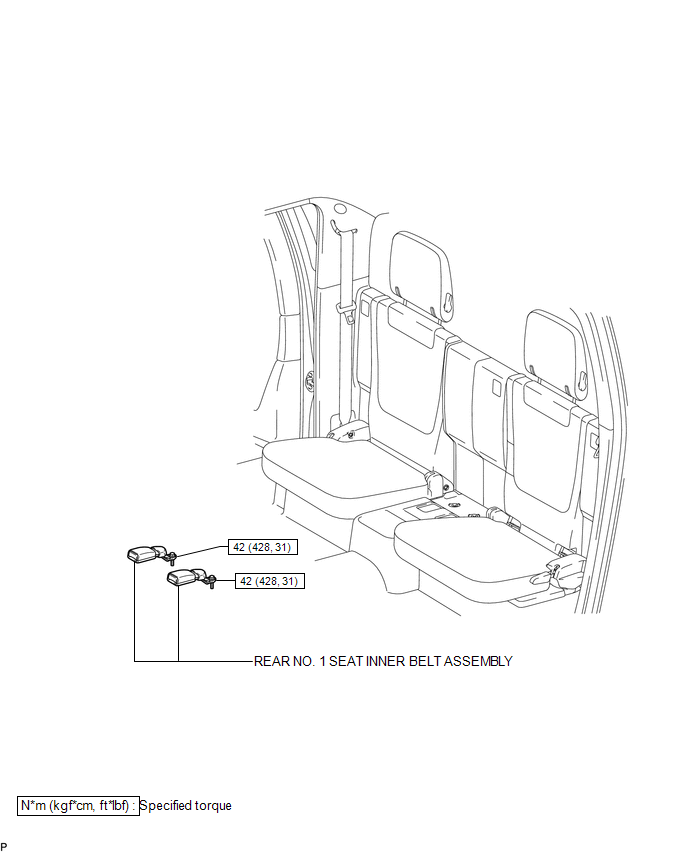
Removal
REMOVAL
PROCEDURE
1. REMOVE REAR NO. 1 SEAT INNER BELT ASSEMBLY
(a) Open the 2 anchor covers.
|
(b) Loosen the 2 bolts to remove the 2 rear No. 1 seat inner belt assemblies. |
|
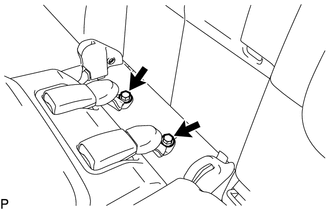
Installation
INSTALLATION
PROCEDURE
1. INSTALL REAR NO. 1 SEAT INNER BELT ASSEMBLY
(a) Tighten the 2 bolts to install the 2 rear No. 1 seat inner belt assemblies.
Torque:
42 N·m {428 kgf·cm, 31 ft·lbf}
(b) Check that the floor anchor rotates smoothly.
(c) Close the 2 anchor covers.
Rear Center Seat Outer Belt Assembly(for Double Cab)
Rear Seat Inner Belt Assembly(for Double Cab)Active traction control system
The active traction control system automatically helps prevent the spinning of
4 wheels when the vehicle is started or accelerated on slippery road surfaces.
■ System operation
Vehicles with an automatic transmission:
Stop the vehicle, shift the shift lever to N and put the frontwheel d ...
Brake Control Signal Mismatch (C1A69)
DESCRIPTION
The skid control ECU (master cylinder solenoid)*1 or skid control ECU (brake
actuator assembly)*2 sends signals to the millimeter wave radar sensor assembly
according to the brake control status. If the millimeter wave radar sensor assembly
receives a vehicle stability control sys ...
Diagnosis System
DIAGNOSIS SYSTEM
1. CHECK DLC3
(a) The vehicle's ECU uses the ISO 9141-2 for communication protocol. The terminal
arrangement of the DLC3 complies with SAE J1962 and matches the ISO 15765-4 format.
Symbols (Terminal No.)
Terminal Description
Condition
...