REMOVAL
PROCEDURE
1. REMOVE NO. 2 ENGINE UNDER COVER SUB-ASSEMBLY (w/ Off Road Package)
2. REMOVE NO. 1 ENGINE UNDER COVER SUB-ASSEMBLY
3. DRAIN ENGINE COOLANT
.gif)
4. REMOVE RADIATOR GRILLE
(See page )
5. REMOVE V-BANK COVER SUB-ASSEMBLY
6. REMOVE RADIATOR SUPPORT TO FRAME SEAL
7. REMOVE RADIATOR SIDE DEFLECTOR LH
|
(a) Remove the clip. |
|
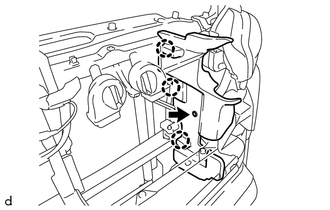
(b) Disengage the 3 claws and remove the radiator side deflector LH.
8. REMOVE RADIATOR SIDE DEFLECTOR RH
|
(a) Remove the clip. |
|
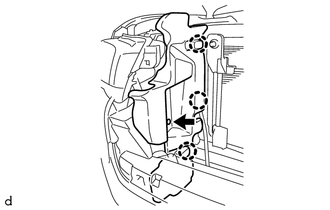
(b) Disengage the 3 claws and remove the radiator side deflector RH.
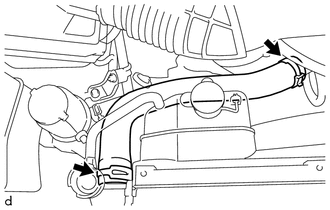
9. REMOVE NO. 1 RADIATOR HOSE
|
(a) Slide the 2 hose clips and remove the No. 1 radiator hose from the water outlet and radiator assembly. |
|
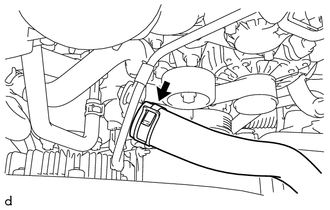
10. REMOVE NO. 2 RADIATOR HOSE
|
(a) Slide the hose clip and disconnect the No. 2 radiator hose from the water inlet with thermostat sub-assembly. |
|
|
(b) Slide the hose clip and remove the No. 2 radiator hose from the radiator assembly. |
|
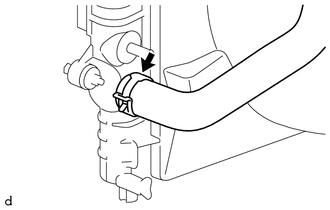
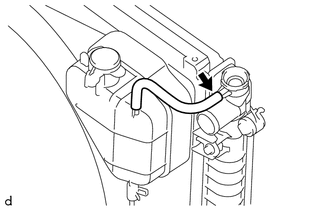
11. DISCONNECT RADIATOR RESERVE TANK HOSE
|
(a) Disconnect the radiator reserve tank hose from the radiator assembly. |
|
12. DISCONNECT TRANSMISSION OIL COOLER HOSE (for Automatic Transmission)
(a) w/o Air Cooled Transmission Oil Cooler:
|
(1) Disengage the clamp to separate the 2 transmission oil cooler hoses from the fan shroud. |
|
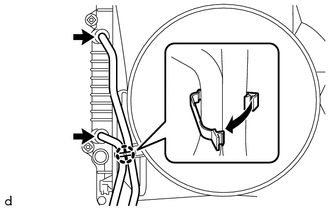
(2) Slide the 2 hose clips and disconnect the 2 transmission oil cooler hoses from the radiator assembly.
(b) w/ Air Cooled Transmission Oil Cooler:
|
(1) Disengage the clamp to separate the 2 transmission oil cooler hoses from the fan shroud. |
|
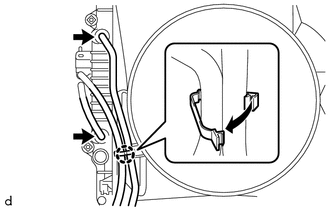
(2) Slide the 2 hose clips and disconnect the 2 transmission oil cooler hoses from the radiator assembly.
13. REMOVE FAN SHROUD
|
(a) Loosen the 4 nuts holding the fan with fluid coupling. |
|
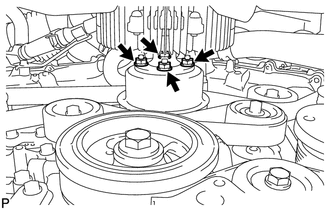
(b) Remove the fan and generator V belt (See page
).
|
(c) Remove the 2 bolts holding the fan shroud. |
|
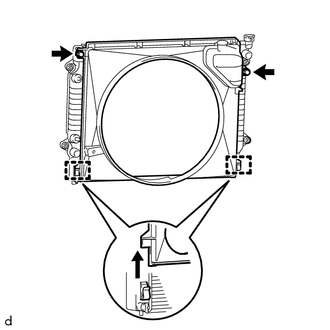
(d) Remove the 4 nuts of the fan with fluid coupling, and then remove the fan shroud together with the fan with fluid coupling.
NOTICE:
Be careful not to damage the radiator core.
(e) Remove the fan pulley from the engine water pump assembly.
14. REMOVE RADIATOR ASSEMBLY
|
(a) Remove the 4 bolts. Text in Illustration
|
|
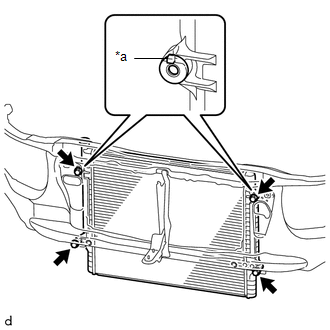
(b) Disengage the 2 hooks and remove the radiator assembly from the radiator support sub-assembly.