Toyota Tacoma history from 1995 to 2026
Explore how the Tacoma evolved across four generations — from the original compact pickup to the current turbocharged, hybrid-capable midsize truck. This overview helps owners identify the right model generation before opening owner, repair and technical documentation.
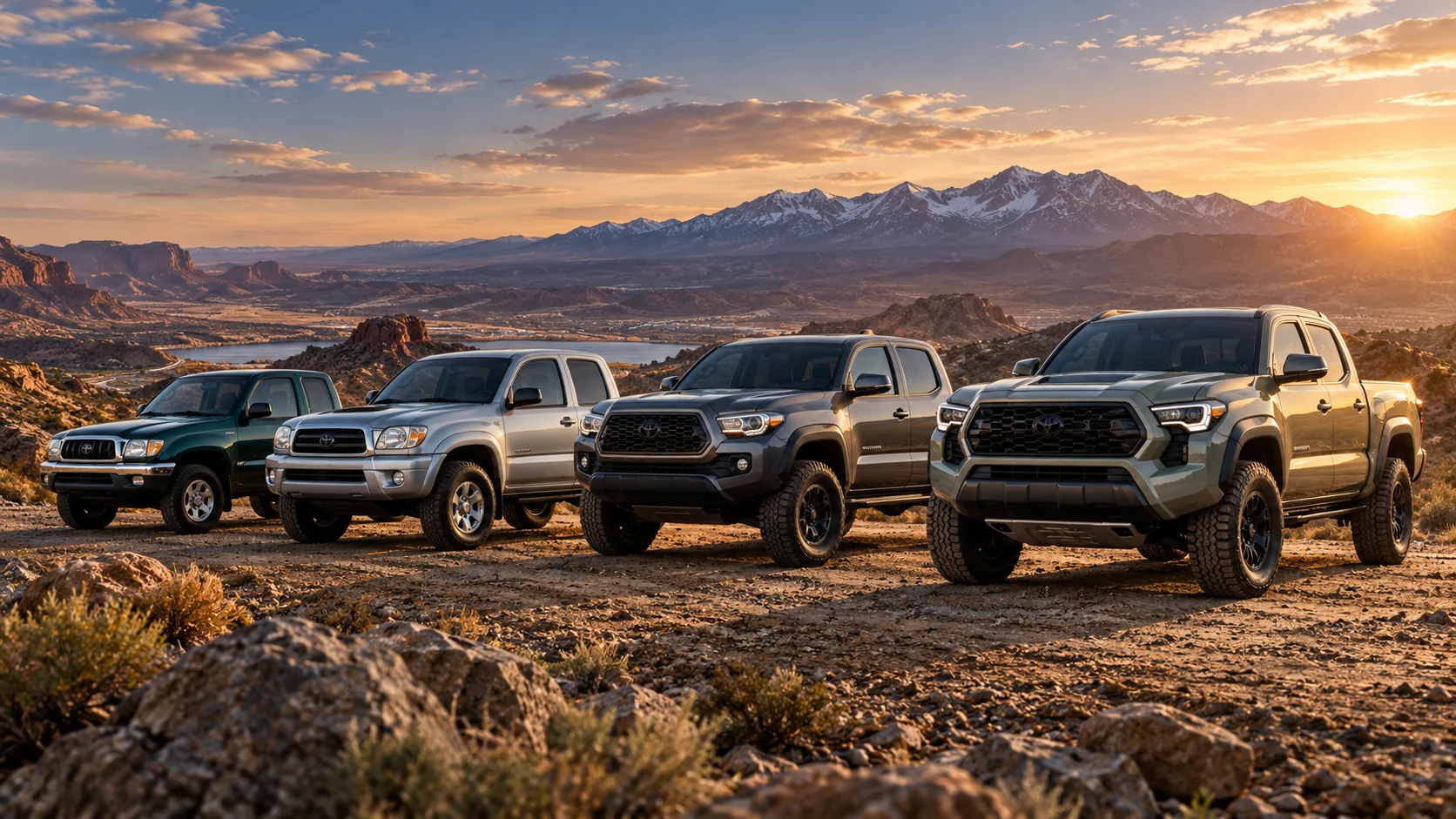
One nameplate, four distinct technical eras
Toyota launched the Tacoma for the 1995 model year as a pickup designed specifically for North American buyers. Over the decades, it grew in size, comfort, safety and off-road capability while remaining a body-on-frame truck aimed at work, recreation and long-term durability.
For TTGuide visitors, the generation matters because powertrains, controls, safety systems, electronics and service procedures differ substantially from one era to another. A 2004 Tacoma manual and a 2024 Tacoma manual solve very different problems.
Tacoma through the generations
A quick visual overview of the four major Tacoma eras before you dive into the detailed history below.
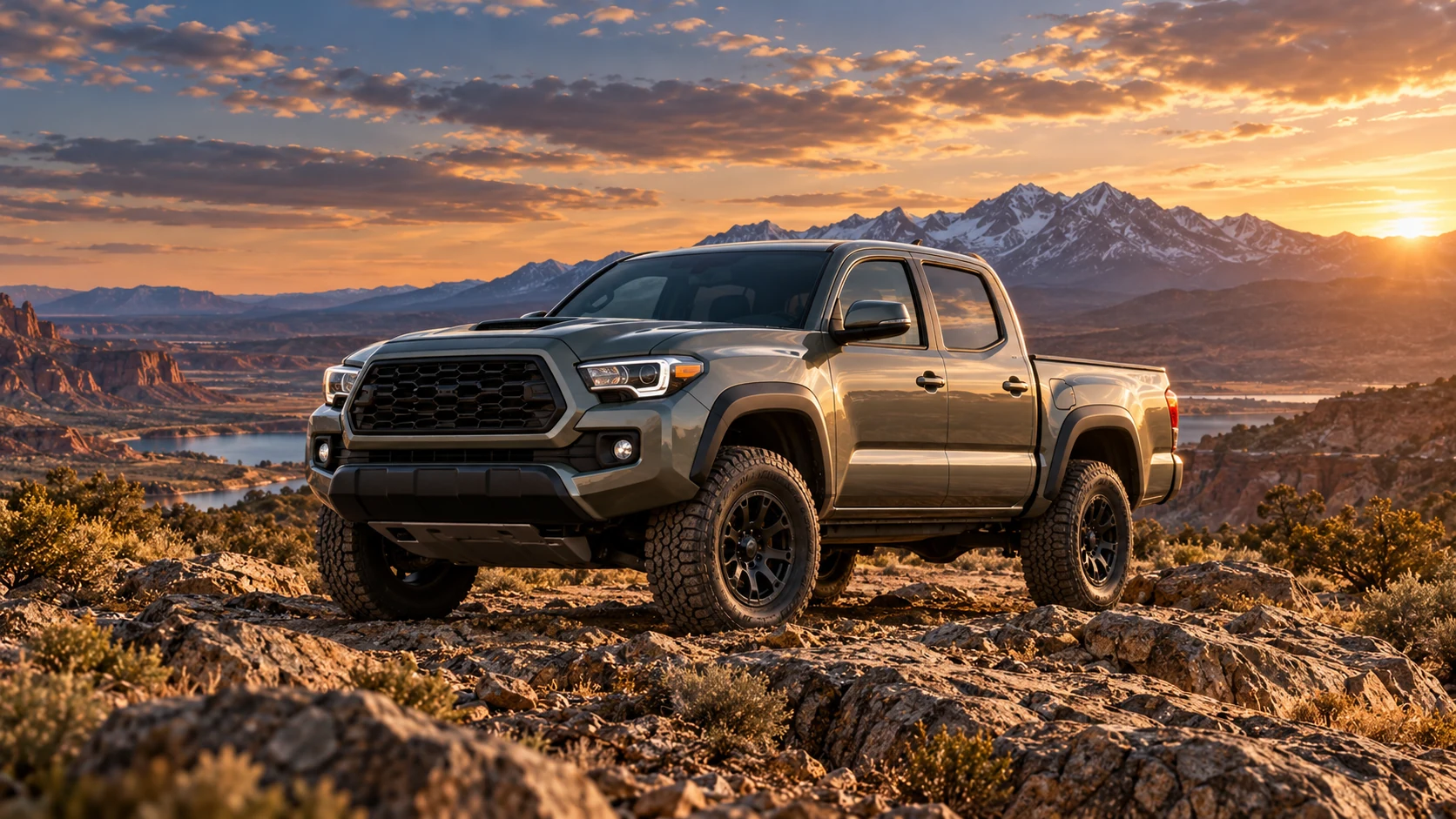
Tacoma generations, explained
Major U.S. model-year milestones, engineering changes and practical distinctions for owners who need the correct TTGuide documentation.
The original Tacoma
A compact truck designed around North American roads, work use and growing recreational demand.
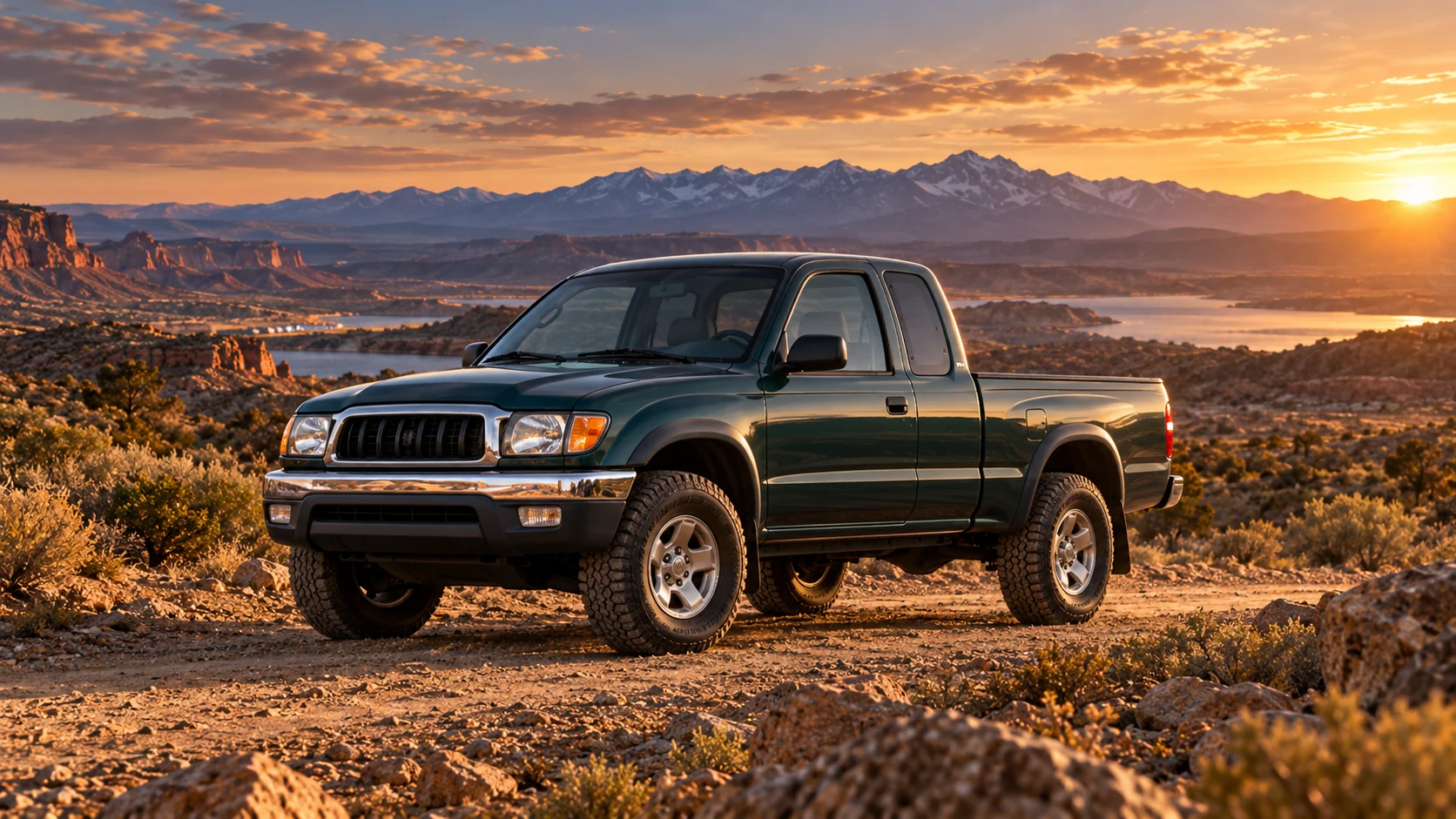
The first Tacoma arrived for the 1995 model year with a redesigned chassis, improved ride and a range of four-cylinder and V6 engines. Compared with Toyota's earlier compact trucks, Tacoma was more refined while still retaining the practical body-on-frame pickup formula.
The Tacoma launches with a new identity, revised suspension and more comfort for everyday driving.
TRD-oriented configurations help shape Tacoma's long-term reputation as a durable off-road pickup.
Styling revisions give the first-generation Tacoma a refreshed front-end appearance.
Bigger, stronger and more versatile
The Tacoma grows into the modern midsize pickup category with broader trim and cab choices.
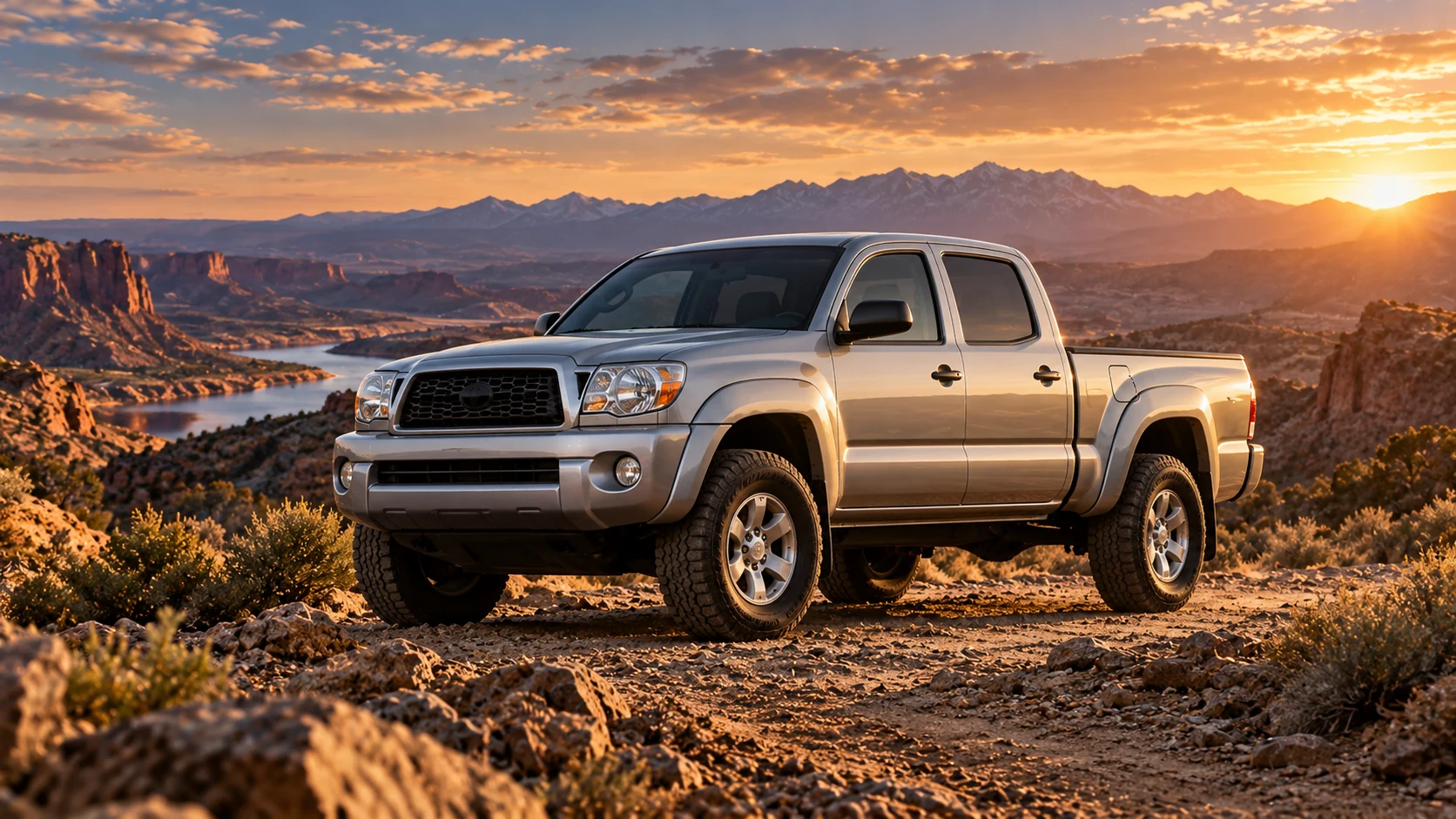
The second-generation Tacoma arrived for 2005 on a larger platform with expanded cab and bed options. Available Double Cab models, a practical 2.7-liter four-cylinder and the well-known 4.0-liter V6 made this era especially popular with buyers needing both utility and daily usability.
A larger body, revised interior and broader model range establish the long-running second-generation formula.
Exterior and cabin refinements help keep the generation current without changing its fundamental architecture.
The second generation closes as Toyota prepares a more modern Tacoma for 2016.
A more modern Tacoma
Sharper styling, updated powertrains and more technology define the third generation.
Introduced for 2016, the third generation brought redesigned bodywork and cabin architecture, a new available 3.5-liter V6 and expanded off-road equipment. Over time, Toyota added more safety technology, multimedia updates and trim differentiation while keeping the same basic platform.
A fresh platform update and a new 3.5-liter V6 distinguish these trucks from the 2005–2015 Tacoma.
The TRD Pro becomes a highly visible part of the generation's identity for enthusiasts.
New multimedia and convenience features make later third-generation models notably different from early 2016 trucks.
This marks the end of the naturally aspirated-engine Tacoma era before the fully redesigned 2024 model.
Turbo and hybrid era
A full redesign built on TNGA-F truck architecture with a new powertrain strategy.
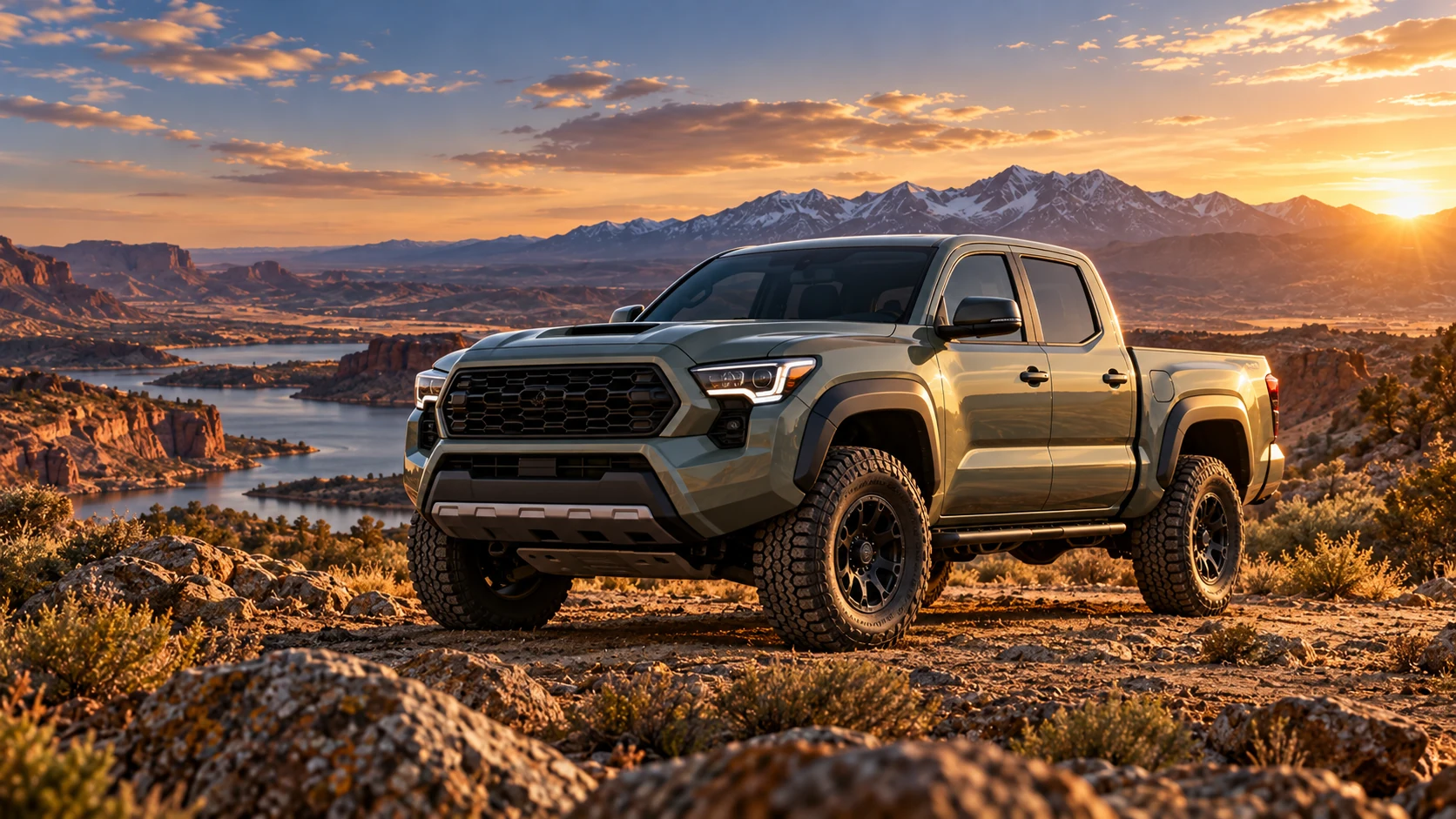
For 2024, Toyota re-engineered the Tacoma around the TNGA-F body-on-frame platform. The naturally aspirated engine lineup gave way to a turbocharged 2.4-liter engine, and the available i-FORCE MAX hybrid added far more torque. The fourth generation also introduced major cabin, suspension and technology changes.
A new boxed frame, redesigned interior and modern truck electronics mark the biggest Tacoma shift in years.
The available i-FORCE MAX hybrid adds stronger torque and a new layer of drivetrain complexity.
Trims such as Trailhunter join the range, reinforcing Tacoma's off-road and overlanding image.
Toyota continues refining options and equipment while retaining the fourth-generation platform and turbo strategy.
Which Tacoma generations are alike?
Use this quick comparison to decide which owner's or technical reference is relevant to your truck.
| Generation | Model years | Characteristic powertrains | What changes most |
|---|---|---|---|
| First | 1995–2004 | Four-cylinder and V6 gasoline engines | Original compact platform and simpler electronics |
| Second | 2005–2015 | 2.7L I4 / 4.0L V6 | Larger body, cabin and chassis |
| Third | 2016–2023 | 2.7L I4 / 3.5L V6 | More advanced driveline, off-road aids and safety equipment |
| Fourth | 2024–2026 | 2.4L turbo / available i-FORCE MAX hybrid | TNGA-F platform, new electronics and hybrid option |
Model years and equipment references on this page are focused primarily on U.S.-market Tacoma vehicles. Features vary by grade, drivetrain and market.
Find the right Tacoma documentation on TTGuide
The history gives context. For procedures, warning lights, systems and specifications, always continue with the reference material for the exact vehicle year and configuration.
Browse Toyota Tacoma manuals
Explore operating information, technical systems, maintenance guidance and owner documentation throughout the TTGuide library.
Browse the library →Search a procedure or system
Find information about 4WD systems, warning lights, engine topics, maintenance items and other Tacoma-related subjects.
Search TTGuide →